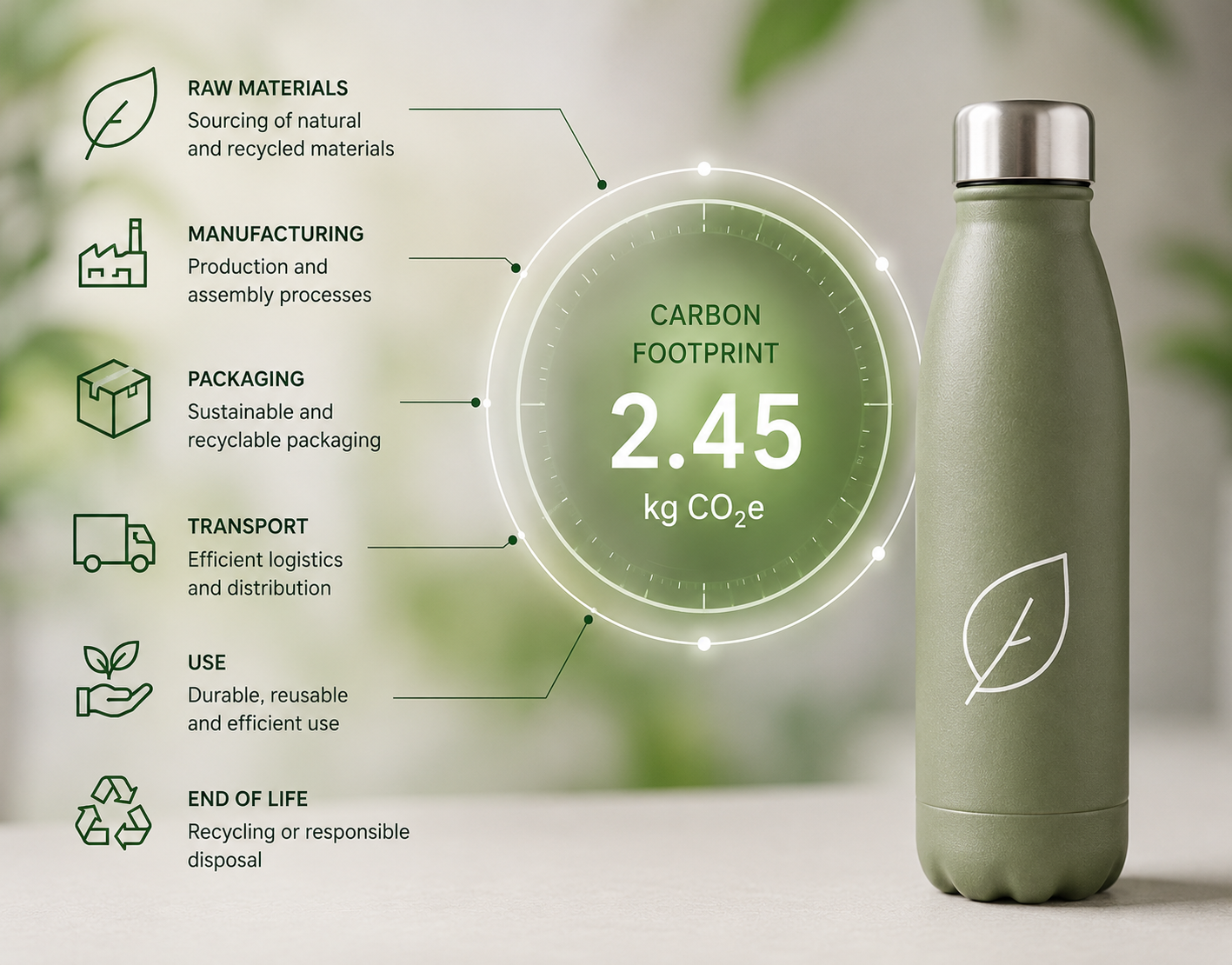
Why Product Carbon Footprints Are a Competitive Advantage
The commercial case for measuring product-level carbon: winning tenders, unlocking retail listings, reducing supply-chain risk, and building brand trust that actually converts.
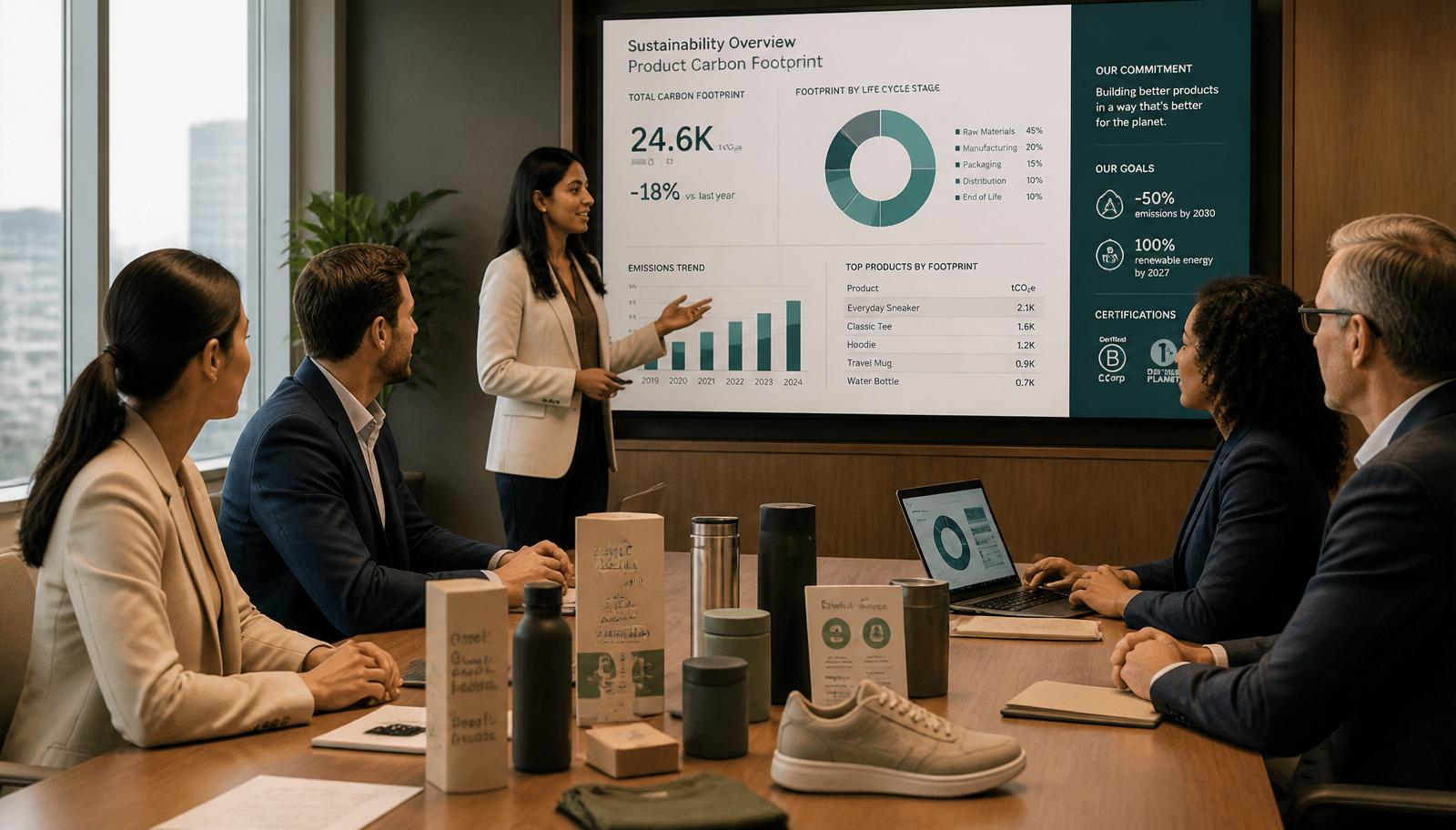
Sustainability moved from cost centre to growth lever
For a decade, carbon reporting was a compliance box tick — something the sustainability team owned in a spreadsheet nobody in commercial ever opened.
That''s changed. In 2026, Product Carbon Footprints (PCFs) are one of the most reliable ways to win new revenue — and one of the biggest sources of avoidable risk if you don''t have them.
Here''s the commercial case, in five parts.
1. Retailer requirements are now hard gates
Major retailers have moved from "we''d like your carbon data" to "we won''t list you without it":
- Walmart ties supplier scoring (and shelf space) to Project Gigaton disclosure.
- Amazon''s Climate Pledge Friendly badge requires third-party carbon verification.
- Tesco, Sainsbury''s and Marks & Spencer ask suppliers for cradle-to-gate PCFs for own-brand lines.
- Sephora, Douglas, and Boots are rolling out beauty-industry carbon standards.
If your competitor has a PCF ready and you don''t, they get the listing.
2. B2B tender scoring rewards transparency
Enterprise procurement is quietly the biggest driver. When a Fortune 500 buyer runs Scope 3 emissions reporting, they need supplier PCF data — and they''re increasingly scoring bids on it.
Typical enterprise RFP now includes:
- Cradle-to-gate PCF per functional unit
- Methodology reference (ISO 14067 or GHG Protocol)
- Trajectory: how has your PCF changed over the last three years?
- Reduction commitments: SBTi-validated targets
Suppliers with credible PCF data win those bids. Suppliers without them get filtered out at the pre-qualification stage, before price is ever discussed.
3. Regulation is closing the "no data" option
The regulatory pipeline is unambiguous:
- EU CBAM (Carbon Border Adjustment Mechanism) — full financial adjustment from 2026, requiring embedded carbon on cement, steel, aluminium, fertiliser, hydrogen and electricity, expanding thereafter.
- EU Digital Product Passport — from 2027, mandatory PCF disclosure across dozens of categories including textiles, batteries, and electronics.
- CSRD / ESRS — European sustainability reporting now expects product-level Scope 3 breakdowns.
- California SB 253 / SB 261 — mandatory GHG disclosure and climate-risk reporting for businesses over $1B and $500M revenue respectively.
- UK SDR — Sustainability Disclosure Requirements coming into force for financial products, cascading pressure up the supply chain.
Late movers face retroactive data requests going back multiple years. Getting a defensible baseline in 2026 is dramatically easier than reconstructing one in 2028.
4. Sustainability drives purchase — when it''s credible
Consumer research consistently shows:
- 73% of global consumers say they''d change buying habits to reduce environmental impact (Nielsen).
- Products with sustainability claims grow ~2x faster than conventional equivalents (NYU Stern CSB).
- Gen Z and Millennial buyers actively check climate credentials before purchase.
But only if the claim is credible. Vague "eco-friendly" language is being aggressively penalised by regulators (EU Green Claims Directive, UK CMA Green Claims Code) and quietly dismissed by consumers.
A quantified PCF backed by ISO methodology is the credible claim. "Made with love for the planet" is not.
5. PCFs de-risk your supply chain
Measuring product carbon forces you to map your supply chain — often for the first time. That map is disproportionately valuable:
- Concentration risk: one supplier providing 80% of a high-carbon material is a resilience risk and a decarbonisation opportunity.
- Geopolitical risk: understanding origin exposes tariff and CBAM exposure early.
- Cost risk: energy-intensive suppliers are exposed to future carbon pricing; PCF data lets you model that in.
Companies that ran serious PCF programmes in 2022–2024 handled the CBAM and Digital Product Passport shocks calmly. Companies that didn''t are scrambling.
What the leaders actually do
The pattern among companies winning on product carbon is consistent:
- Estimate every SKU using AI-assisted PCFs — get the map fast, imperfectly.
- Deep-dive the top 20% with full primary-data LCAs.
- Publish the estimates with clear methodology and confidence bands.
- Set reduction targets by category, using PCF baselines.
- Ship annually improved versions and document the delta.
Notice what''s not on the list: waiting three years to have perfect data. Perfect data next year is worth less than defensible data today.
The ROI, roughly
For a mid-sized brand (500–2000 SKUs):
- Traditional LCA route: £2.5M+ over 3 years, incomplete coverage
- AI-first route: £50k–£150k to cover the catalogue, £250k for targeted deep-dives on hotspots
That difference — 10-20× cheaper — is why every serious sustainability team we work with is now running an AI-first strategy.
What to do this quarter
If you haven''t started:
- Pick 10 hero SKUs and generate baseline PCFs this week
- Map the top-3 hotspot materials across those SKUs
- Brief procurement on what data you now need from suppliers
- Set a public baseline and a 3-year reduction target
- Publish the methodology so buyers can trust the numbers
Product-level carbon reporting is where corporate emissions reporting was in 2018 — a fringe practice about to become universal. The companies moving now will spend the next five years defining category benchmarks. The rest will spend those years catching up.
Ready to start? Generate a free PCF from any product URL — no card, no consultants, decisions today.
Ready to understand your product's carbon footprint?
Paste a product URL and generate a professional, boardroom-ready carbon report in minutes — aligned with ISO 14067 and the GHG Protocol.